Built-Up (BUR) & Modified Bitumen Roof Coating Restoration
Restorative coating systems built for gravel-surfaced built-up roofs and cap-sheet modified bitumen membranes, sealing seams and worn asphalt surfaces into a single reflective, weatherproof layer without a tear-off.
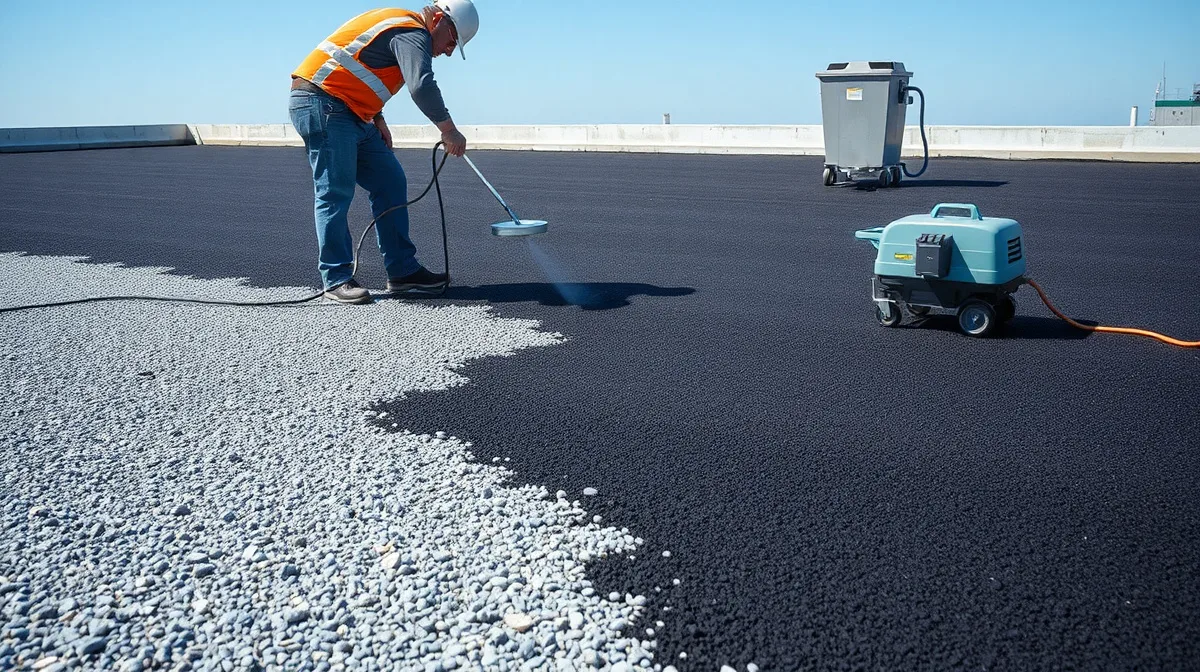
Built-up roofing (BUR) and modified bitumen are two of the most common low-slope roof types on commercial and industrial buildings nationwide, and both age the same way: the asphalt-based surface oxidizes, seams and laps start to separate, gravel shifts or thins out, and granule loss exposes the cap sheet to UV degradation. None of that means the roof needs to come off. In most cases the underlying felts and insulation are still structurally sound, and what the roof actually needs is a restored, fully-adhered waterproof surface. That's the role a coating system plays: it seals the existing substrate into one seamless membrane instead of replacing it.
As a Conklin-certified applicator, we install Conklin-brand coating systems engineered for asphalt-based substrates, and every project on a BUR or modified bitumen roof starts with the surface itself. Gravel-surfaced roofs require an embedment or removal assessment before anything goes down, since loose aggregate has to be handled correctly for the coating to bond. Cap-sheet modified bitumen roofs need their own prep pass for granule loss, blistering, and lap integrity. From there, seams get reinforced, damaged areas get repaired, and a base coat and reflective topcoat go on to manufacturer specification. The result is a renewed, weatherproof surface that restores an aging asphalt roof rather than tearing it out — one certified applicator, one coating-first approach, applied nationwide.
Why property owners choose it
- Restores a watertight surface over an existing BUR or modified bitumen roof without the cost and disruption of a full tear-off.
- Seals the seams, laps, and flashing details that are the most common failure points on aging asphalt-based roofs.
- Addresses gravel-surfaced and cap-sheet conditions with prep methods matched to each substrate rather than a one-size-fits-all approach.
- Applies a high-reflectivity topcoat that lowers rooftop surface temperature and reduces cooling load compared to a dark, oxidized asphalt surface.
- Extends functional roof life by 10-15+ years on a properly prepped and maintained restoration.
- Qualifying installations are eligible for Conklin-backed, non-prorated NDL material and labor warranties when installed to certified-applicator specification.
Preparing a BUR or Modified Bitumen Roof for Coating
Asphalt-based roofs need substrate-specific prep before any coating system goes down, and that starts with an honest assessment of what's under the surface. On gravel-surfaced BUR roofs, we survey how much aggregate is loose versus embedded and determine whether gravel needs to be removed, swept back, or worked into the coating system as part of the finished surface — skipping this step is the single most common reason a coating fails to bond on a BUR roof. Cap-sheet modified bitumen roofs get a different pass, focused on granule loss, surface oxidation, and lap condition.
Every project also includes a moisture assessment, since coating over wet insulation or a saturated deck just traps the problem under a new surface. Cracks, blisters, and open laps get cut in and repaired, and any area that can't be dried out or properly repaired gets flagged before we recommend coating over it.
- Gravel embedment/removal survey on BUR roofs
- Granule-loss and surface-condition assessment on modified bitumen
- Moisture scan of insulation and deck
- Blister, crack, and open-lap repair
- Surface cleaning and, where needed, priming ahead of coating
Seam Sealing and Detail Work
Seams, laps, and flashing transitions are where asphalt-based roofs fail first, and they get the most attention before a topcoat ever goes down. On BUR roofs, that means checking every lap and ply transition for separation; on modified bitumen, it's the seams between cap sheet runs and every penetration, curb, and drain detail. We reinforce these areas with fabric detailing embedded in coating material, which bridges movement and gives the finished membrane a continuous, fully-adhered seal rather than a series of patched joints.
This detail work matters as much as the field coating itself. A roof with a perfect topcoat but unsealed seams will still leak at the laps, so we treat penetrations, flashings, drains, and parapet transitions as their own scope of work rather than an afterthought to the broader application.
- Fabric-reinforced seam and lap treatment
- Flashing and curb detail sealing
- Drain and penetration detailing
- Parapet and wall-transition treatment
Applying the Reflective Topcoat System
Once the substrate is prepped and seams are sealed, we apply a base coat followed by a reflective topcoat to Conklin manufacturer specification and mil-thickness requirements. The choice between a silicone or acrylic system depends on the roof's drainage: silicone systems are non-sacrificial and hold up better where ponding water is a recurring condition, while acrylic systems offer strong reflectivity and cost-effective performance on roofs that drain well. Either system restores the asphalt-based surface into one seamless, weatherproof membrane.
Coverage rates, coat counts, and cure times are set by the manufacturer's specification for the substrate and system selected, and we inspect the finished application before closing out the project. The result is a renewed roof surface, backed by Conklin-backed warranty terms on qualifying installations, without the deck-to-drain disruption of a full replacement.
- Base coat and reflective topcoat applied to manufacturer mil-thickness spec
- Silicone or acrylic system selected based on ponding-water conditions
- Post-application inspection before project close-out
Ideal for
- Gravel-surfaced BUR roofs with sound underlying felts but a worn, oxidized, or thinning gravel/asphalt surface.
- Cap-sheet modified bitumen roofs showing granule loss, surface chalking, or minor blistering.
- Property owners who need to restore a roof without disrupting tenants, production, or building operations.
- Roofs with isolated seam separations, minor ponding, or localized repairs rather than widespread deck or insulation damage.
- Facility and asset managers looking to extend a roof's service life ahead of a planned capital replacement cycle.
What affects the cost
BUR & Mod Bit Coating questions, answered
In most cases, yes. It requires an embedment/removal assessment first, since loose gravel has to be addressed before a coating system can properly bond to the surface. A Conklin-certified applicator evaluates this during the initial inspection.
Granule loss and surface oxidation are exactly the conditions a restorative coating is designed to address. After cleaning and any needed repairs, the coating system bonds to the prepped cap sheet and restores a continuous weatherproof surface.
It depends on drainage. Silicone performs better where ponding water is a recurring condition, since it's non-sacrificial and resists UV and standing water over the long term. Acrylic is a cost-effective, highly reflective option on roofs that drain well.
A properly prepped and maintained restoration typically extends roof life 10-15+ years, and qualifying installations can carry Conklin-backed NDL material and labor warranties when installed to certified-applicator specification.
Saturated insulation, a compromised deck, or widespread structural damage found during the moisture assessment are the main disqualifiers. In those cases, we'll say so directly and walk through restoration-versus-replacement rather than recommend coating over a roof that isn't a good candidate.
BUR & Mod Bit Coating done right, by a certified applicator crew
BUR & Mod Bit Coating isn't a commodity — the result depends entirely on how carefully it's prepped and applied. We assess what your roof actually needs, prep the substrate properly, and apply Conklin-brand coating systems to manufacturer specification, so the work delivers the durability and reflectivity it's supposed to. No shortcuts, no builder-grade rush.
We serve residential and commercial property owners nationwide. Every job starts with a free, no-pressure roof inspection, and every estimate is our own project pricing — never presented as official Conklin corporate pricing.
Just as important, we treat your roof like the system it is. Substrate condition, prep quality, coat count, and topcoat selection all interact, and getting one right while ignoring the others leaves durability on the table. When we scope your bur & mod bit coating, we look at how it fits the whole roof, so the finished result performs the way it should for years to come.
Free inspection
We evaluate your roof and give you a clear, itemized estimate with no pressure.
Certified application
We prep and apply your bur & mod bit coating to manufacturer spec — clean and on schedule.
A roof you can trust
A durable, reflective restoration and honest guidance on Conklin-backed warranty terms.
Related services
Ready for a free bur & mod bit coating estimate?
Tell us about your roof and we'll put together a clear, no-pressure coating estimate — commercial or residential, anywhere in the country.