Metal Roof Restoration & Coating
A complete rust-to-topcoat restoration sequence for metal roofs - rust assessment, mechanical prep, rust-inhibitive primer, and a reflective coating that stops leaks, seam failure, and roof sweating.
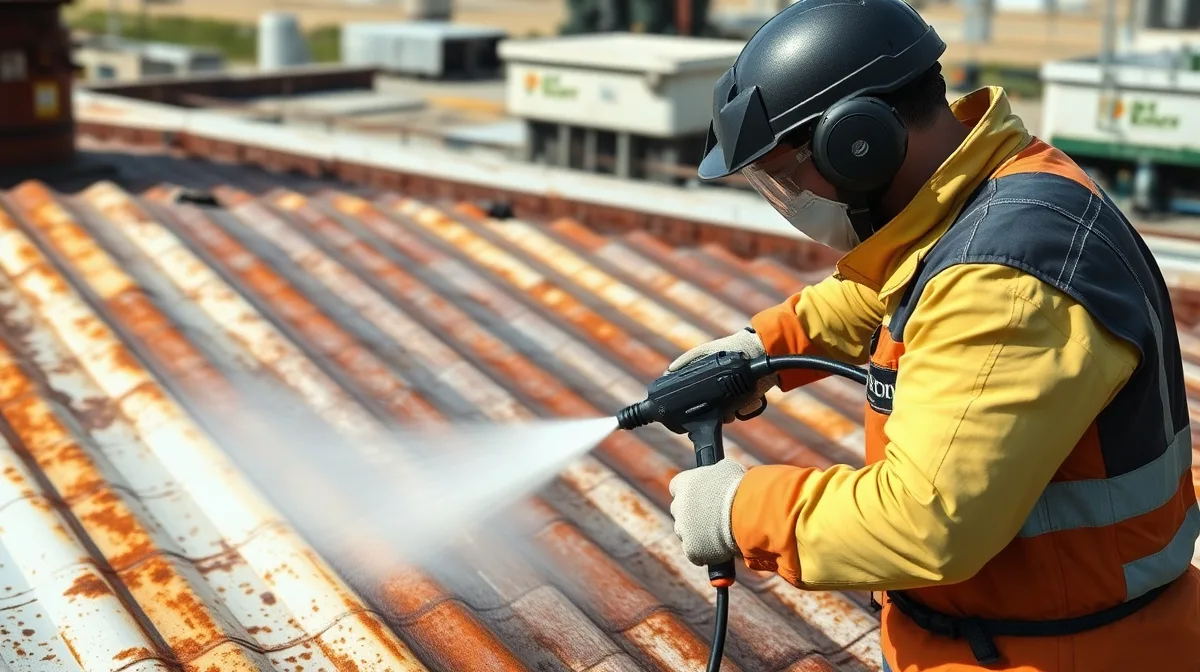
Metal roofs fail differently than any other commercial roof substrate, and most repair crews treat them the same way they'd treat a single-ply membrane - which is why so many metal roof coating jobs fail within a few years. The real threat on a metal roof almost never starts as a hole in a panel. It starts as rust: at exposed fastener heads, along standing-seam laps, at cut edges, and anywhere the factory finish has worn through. Left alone, that rust migrates under any topcoat applied over it, and the coating bubbles, stains, or peels from underneath - a failure mode commonly called rust bleed-through. As a Conklin-certified applicator, we install Conklin's Metal Restoration (MR) systems nationwide and build every metal roof project around rust as the primary technical problem to solve, not an afterthought to paint over. That distinction matters because a metal panel that looks freshly coated on installation day can still be actively corroding underneath if the prep work was rushed, and the failure won't show up until the following season.
That means our metal roof projects always follow the same sequence, in this order: a documented rust assessment across the full roof, mechanical surface prep to remove active corrosion, a rust-inhibitive metal primer application at fasteners, seams, and any oxidized panel area, and only then a reflective elastomeric topcoat. This sequence is what actually stops metal roof leaks, slows oil-canning-related seam stress, and cuts down on condensation buildup underneath the deck - what facility teams usually describe as the roof "sweating." We serve metal roofs nationwide, segmented by substrate condition rather than location, because the right approach for a lightly oxidized standing-seam roof is different from the right approach for a through-fastened panel roof with years of untreated rust at every screw head. Whether the building is a warehouse, a metal-clad manufacturing facility, or a retrofitted agricultural structure, the same rust-first sequence applies before a single gallon of topcoat goes down.
Why property owners choose it
- Rust-inhibitive primer stops active corrosion at fasteners and seams before it can spread under the topcoat.
- Dedicated fastener and seam treatment blocks the rust bleed-through that causes most premature metal coating failures.
- A reflective topcoat lowers surface temperature and reduces the thermal cycling that drives oil-canning-related seam stress.
- Coating a structurally sound metal roof costs a fraction of a full metal panel tear-off and re-roof.
- Properly treated seams and fastener heads close the small leak points that account for the majority of metal roof water intrusion.
- A sealed, reflective metal roof reduces interior temperature swings and the condensation drip commonly called roof sweating.
Rust Assessment & Mechanical Surface Prep
Every metal roof restoration starts with a full rust assessment, not a topcoat estimate. We walk the entire roof documenting where corrosion is active versus cosmetic - fastener heads, panel laps, cut edges, flashing details, and any low spots where water has been sitting against the metal. This assessment determines how much mechanical prep the roof actually needs before any coating product goes down, and it's the step most quick-paint jobs skip entirely. We also note which fasteners have backed out or stripped, since a loose fastener under a fresh coating will eventually work itself free and create a new leak point regardless of how well the surrounding coating performs.
Mechanical prep follows the assessment: wire brushing to remove loose scale and active rust down to a sound surface, pressure washing to strip chalking, oxidation, and surface contaminants, and spot-treatment of any fastener that's backed out, stripped, or already rusted through. Skipping mechanical prep and coating directly over active rust is the single most common reason metal roof coatings fail early - the topcoat can only bond and perform as well as the surface underneath it. On heavily oxidized panels, this stage can take longer than the coating application itself, but it's the work that determines whether the finished system lasts one recoat cycle or well over a decade.
- Full-roof rust and oxidation survey with documented findings
- Wire-brush removal of loose scale and active corrosion
- Pressure washing to strip chalking and surface contaminants
- Fastener inspection - tightening, replacement, or re-seating as needed
- Substrate profile check to confirm the surface is ready for primer
Rust-Inhibitive Primer & Seam/Fastener Treatment
Once the metal surface is mechanically prepped, we apply a rust-inhibitive metal primer before any topcoat touches the roof. This primer step is not optional on a metal restoration project - it's what actually stops corrosion from continuing to migrate under the coating system. Fastener heads and seam laps get specific attention here, because these are the two failure points where rust bleed-through shows up first and does the most damage to a finished coating. On roofs with widespread surface rust, we'll typically run a second primer pass over the worst-affected panels before moving on to detail work.
At seams, flashing details, and fastener rows, we detail in a fiber or fabric-reinforced product ahead of the primer or topcoat, adding tensile strength exactly where the metal roof flexes and moves the most. This reinforced detailing is what keeps a seam sealed through thermal expansion and contraction instead of cracking open after one or two seasons. Primer is allowed to fully cure before topcoat application begins, which protects the whole system's long-term adhesion. Rushing this cure window is a common shortcut on lower-cost jobs, and it's one of the fastest ways to compromise an otherwise well-prepped roof.
- Rust-inhibitive primer applied to all oxidized and bare metal areas
- Fiber/fabric-reinforced detailing at seams, laps, and flashing
- Fastener head treatment to seal against future rust bleed-through
- Full primer cure time observed before topcoat application
Reflective Topcoat: Stopping Leaks, Seam Failure & Roof Sweating
With rust addressed and the primer cured, we apply the reflective elastomeric topcoat that finishes the system. This is the layer that gives the roof its finished, monolithic waterproof surface - sealing fastener rows, seams, and panel laps into one continuous membrane instead of dozens of individual leak points. It's also the layer that does the visible work: a bright, reflective metal roof runs cooler under direct sun, which reduces the daily heat-cycle expansion and contraction that contributes to oil-canning-related seam stress over time. Depending on roof condition and exposure, we'll typically spec either a single heavy-mil coat or a two-coat system for additional film build over seams and fastener rows.
The reflective topcoat also plays a direct role in reducing condensation, or "roof sweating," on the underside of the deck. A cooler, properly sealed metal roof reduces the temperature differential between the roof surface and interior air that drives condensation drip - a common complaint on uninsulated or lightly insulated metal buildings. Combined with the rust-inhibitive prep underneath it, the topcoat is designed to hold up for years rather than needing re-application after one season. Facility teams that have dealt with recurring drip stains on ceiling tile or corrosion on stored equipment under a sweating metal roof are usually the ones who notice this improvement fastest.
- Reflective elastomeric topcoat seals seams, laps, and fasteners into one membrane
- Reduces surface temperature swings tied to oil-canning-related seam stress
- Lowers the roof-to-interior temperature differential that drives condensation
- Finished system backed by Conklin-backed material warranties on qualifying installations
Ideal for
- Metal roofs showing visible rust streaking, spotting, or oxidation at fasteners, seams, or panel edges
- Standing-seam or through-fastened metal roofs with early oil-canning or seam movement
- Buildings experiencing interior condensation drip or "roof sweating" during seasonal temperature swings
- Facility and property managers who want to extend a metal roof's service life without a full re-roof
- Metal roofs that are structurally sound overall but are due for a rust-prevention maintenance recoat
What affects the cost
Metal Roof Coating questions, answered
If active rust isn't fully removed and primed before the topcoat goes on, corrosion keeps working underneath the finished coating. This is rust bleed-through - it shows up as staining, bubbling, or peeling months or years later, even though the roof looked fully coated on installation day. That's why the assessment and mechanical prep steps happen before any product is applied, not alongside the topcoat.
In most cases, yes. Surface and moderate rust can be mechanically removed and treated with a rust-inhibitive primer as part of the restoration sequence. Panels with rust-through holes or significant structural loss are flagged during the assessment and may need spot repair or panel replacement before coating can proceed.
Roof sweating is condensation forming on the underside of a metal roof deck when the roof surface and interior air temperatures differ significantly. A reflective topcoat lowers the roof surface temperature, which reduces that differential and cuts down on condensation drip inside the building.
Coating doesn't eliminate the cosmetic waviness of oil-canning, but reinforced seam and fastener detailing combined with a reflective topcoat reduces the thermal cycling that drives oil-canning-related seam stress and stops it from progressing into an actual leak point.
It adds prep and cure time, but skipping it is what causes early coating failure. On most metal roofs, rust assessment, mechanical prep, and primer application take roughly as long as the topcoat application itself, and that time is what makes the finished system last.
Metal Roof Coating done right, by a certified applicator crew
Metal Roof Coating isn't a commodity — the result depends entirely on how carefully it's prepped and applied. We assess what your roof actually needs, prep the substrate properly, and apply Conklin-brand coating systems to manufacturer specification, so the work delivers the durability and reflectivity it's supposed to. No shortcuts, no builder-grade rush.
We serve residential and commercial property owners nationwide. Every job starts with a free, no-pressure roof inspection, and every estimate is our own project pricing — never presented as official Conklin corporate pricing.
Just as important, we treat your roof like the system it is. Substrate condition, prep quality, coat count, and topcoat selection all interact, and getting one right while ignoring the others leaves durability on the table. When we scope your metal roof coating, we look at how it fits the whole roof, so the finished result performs the way it should for years to come.
Free inspection
We evaluate your roof and give you a clear, itemized estimate with no pressure.
Certified application
We prep and apply your metal roof coating to manufacturer spec — clean and on schedule.
A roof you can trust
A durable, reflective restoration and honest guidance on Conklin-backed warranty terms.
Related services
Ready for a free metal roof coating estimate?
Tell us about your roof and we'll put together a clear, no-pressure coating estimate — commercial or residential, anywhere in the country.