Single-Ply (TPO / EPDM / PVC) Roof Coating Restoration
A fully-adhered elastomeric coating system that restores an aging but structurally sound single-ply membrane to a seamless, watertight surface — without tearing off the existing roof.
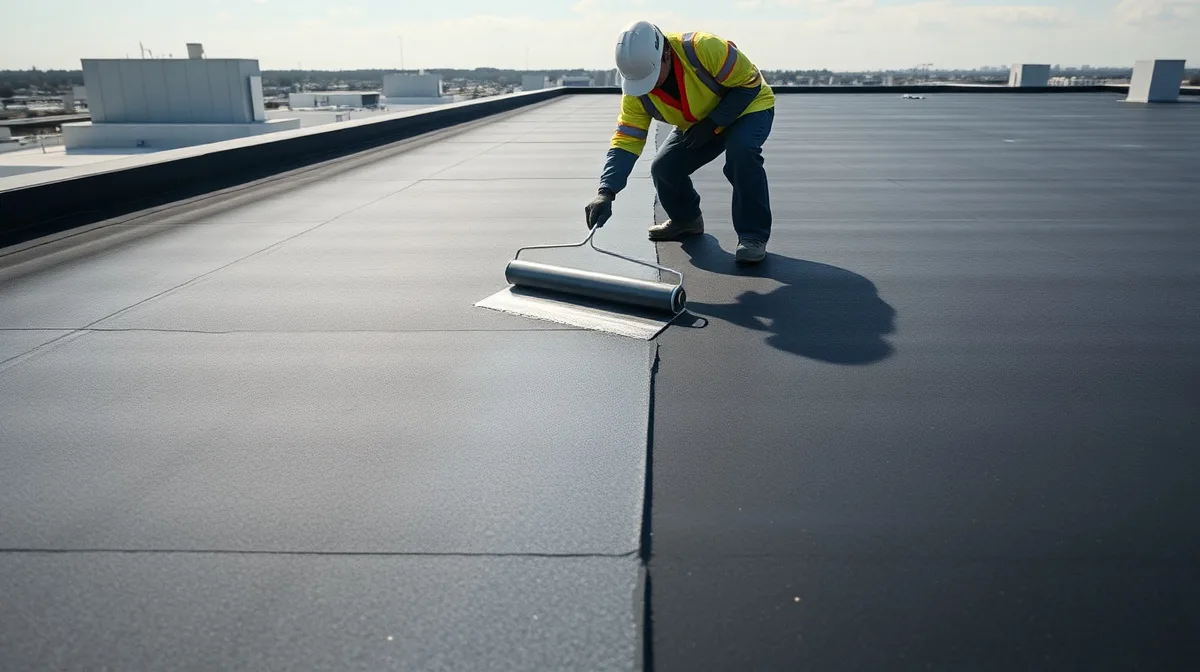
Single-ply membranes — TPO, EPDM, and PVC — are among the most common low-slope commercial roof systems installed in the United States, and for good reason: they're fast to install, lightweight, and reasonably durable when new. But every single-ply roof eventually reaches a point where the seams start to work loose, the membrane surface chalks or shrinks, and small punctures and flashing failures start showing up faster than a maintenance crew can patch them. That doesn't automatically mean the roof needs to come off. In most cases where the membrane is still adhered, the insulation underneath is dry, and the deck hasn't been compromised, a single-ply roof is an excellent candidate for a restorative coating system rather than a full tear-off.
As an independent, certified applicator of Conklin-brand roof coating systems, we install fully-adhered elastomeric coatings — typically silicone or acrylic, depending on the roof's exposure to ponding water and UV — directly over prepared TPO, EPDM, or PVC membranes nationwide. The process includes cleaning and priming the membrane to manufacturer specification, reinforcing seams and penetrations with fabric detailing so those are no longer the roof's weak point, and finishing with a seamless, monolithic coating that outperforms the bare membrane's original waterproofing and reflectivity. It's a fraction of the cost and disruption of replacement, and it can add another decade or more of service life to a roof that's otherwise sound. We'll always tell you honestly if your membrane has passed the point where coating still makes sense — that's part of being a certified applicator, not just a salesperson.
Why property owners choose it
- Extends the service life of an existing TPO, EPDM, or PVC roof by 10-15+ years without a disruptive tear-off.
- Seam reinforcement with fabric detailing addresses the single most common failure point on aging single-ply membranes.
- A fully-adhered, seamless coating eliminates the loose laps and open seams that let water track underneath the membrane.
- High-reflectivity topcoat options reduce rooftop surface temperature compared to a bare, weathered membrane.
- Coating restoration typically costs a fraction of full membrane replacement per square foot.
- Conklin-backed material warranties are available on qualifying installations when the certified-applicator process is followed.
How We Restore a Single-Ply Membrane
Every project starts with a free inspection, because coating suitability on a single-ply roof depends entirely on the membrane's actual condition — not just its age. We check for adhesion loss, seam integrity, ponding areas, and signs of moisture in the insulation below (using infrared scanning or core sampling where warranted). If the roof qualifies, prep work begins: the membrane is pressure-washed to remove chalking, dirt, and any surface contaminants that would prevent the coating from bonding, and any active punctures, blisters, or lifted seams are repaired first.
From there, we apply a membrane-compatible primer where the coating manufacturer specifies one — TPO and PVC in particular often need a primer step that EPDM doesn't always require, since these are chemically different plastics and rubbers that bond differently to a coating. Seams, penetrations, drains, and flashing details get reinforced with a fabric-reinforced base coat before the field coating goes down, since these are the areas that fail first on an unreinforced membrane. The finish coat — typically silicone for roofs with any regular ponding water, or acrylic for well-draining roofs where cost efficiency matters more — is then applied to full manufacturer mil thickness across the entire roof, creating one continuous, fully-adhered waterproof surface.
- Free inspection and moisture scan of deck/insulation before any quote
- Pressure-wash and repair of punctures, blisters, and lifted seams
- Membrane-specific primer application (TPO/PVC often require priming; EPDM varies)
- Fabric-reinforced detailing at all seams, penetrations, drains, and flashings
- Full-thickness silicone or acrylic topcoat applied to manufacturer specification
Which Single-Ply Conditions Are (and Aren't) Good Coating Candidates
Not every single-ply roof should be coated, and part of our job as a certified applicator is telling you when it shouldn't be. Good candidates typically show cosmetic and minor functional aging — surface chalking, UV shrinkage, isolated seam separation, small areas of granule or gloss loss, and localized punctures — while the membrane itself is still fully adhered to the substrate and the insulation below tests dry. On these roofs, a coating restoration genuinely resets the clock: it re-waterproofs the surface, reinforces the weak points, and buys another decade-plus of service life at a fraction of replacement cost.
Poor candidates are roofs with widespread membrane delamination or shrinkage that's pulling seams apart across large areas, saturated or wet insulation (which no coating can fix, since it traps moisture underneath and accelerates deck deterioration), extensive ponding that's caused long-term membrane degradation rather than a simple ponding-tolerant coating fix, or structural deck damage. If a roof falls into this category, we'll say so plainly during the inspection — recommending replacement when that's genuinely the right call is part of being an honest, independent certified applicator rather than a manufacturer's sales arm.
- Good candidates: surface chalking, minor UV shrinkage, isolated seam or puncture issues, dry insulation
- Poor candidates: widespread delamination, saturated insulation, deck damage, extensive uncorrected ponding history
- A moisture scan during the free inspection is what actually determines candidacy — not membrane age alone
Why Certified-Applicator Installation Matters on Single-Ply Roofs
TPO, EPDM, and PVC are three different chemistries, and each one interacts differently with a coating system — priming requirements, adhesion behavior, and recommended coating thickness all vary by membrane type. Getting that wrong doesn't just void a warranty; it can mean a coating that never properly bonds to the membrane in the first place. As an independent contractor certified to install Conklin roof coating systems, we've completed the manufacturer's training programs covering substrate-specific prep and application procedures, so the process is matched to the membrane actually on your roof rather than a one-size-fits-all approach.
This distinction also matters for warranty eligibility. Conklin-backed material warranties are available on qualifying installations, but that coverage is tied to the installation following certified-applicator procedures — it isn't something we, as the applicator, issue or guarantee on Conklin's behalf. We'll walk you through what warranty terms apply to your specific system and roof condition during the estimate, in plain factual terms, so you know exactly what you're getting before work begins.
Ideal for
- TPO, EPDM, or PVC roofs with surface chalking, shrinkage, or minor UV degradation but a membrane that's still firmly adhered
- Roofs with isolated seam separations, pinholes, or small punctures rather than widespread membrane failure
- Buildings where the deck and insulation underneath have tested dry with no significant trapped moisture
- Facility managers looking to defer a full roof replacement capital expense while keeping the roof watertight and under warranty
- Properties where minimizing rooftop disruption to ongoing operations matters as much as the waterproofing outcome
What affects the cost
Single-Ply Coating questions, answered
In most cases, yes — as long as the membrane is still fully adhered, the seams aren't widely failing, and the insulation underneath tests dry. We confirm candidacy with a free inspection before quoting any project, and we'll recommend replacement instead if the roof has passed that point.
Yes. TPO and PVC are different plastics than EPDM rubber, and each typically requires a specific primer and prep approach to get proper adhesion. As a Conklin-certified applicator, we match the primer and coating system to the membrane type actually installed on your roof.
Seams and penetration details are reinforced with fabric-reinforced coating before the full-field topcoat is applied. This addresses the most common failure point on aging single-ply membranes rather than just coating over the problem.
A properly installed restoration coating over a sound single-ply membrane typically extends usable roof life by 10-15+ years, with periodic maintenance recoats protecting that lifespan and any applicable Conklin-backed warranty.
Widespread membrane delamination, saturated or wet insulation, extensive ponding-related degradation, and structural deck damage are conditions a coating can't correct. We'll identify these during the free inspection and recommend replacement honestly if that's the right call.
Single-Ply Coating done right, by a certified applicator crew
Single-Ply Coating isn't a commodity — the result depends entirely on how carefully it's prepped and applied. We assess what your roof actually needs, prep the substrate properly, and apply Conklin-brand coating systems to manufacturer specification, so the work delivers the durability and reflectivity it's supposed to. No shortcuts, no builder-grade rush.
We serve residential and commercial property owners nationwide. Every job starts with a free, no-pressure roof inspection, and every estimate is our own project pricing — never presented as official Conklin corporate pricing.
Just as important, we treat your roof like the system it is. Substrate condition, prep quality, coat count, and topcoat selection all interact, and getting one right while ignoring the others leaves durability on the table. When we scope your single-ply coating, we look at how it fits the whole roof, so the finished result performs the way it should for years to come.
Free inspection
We evaluate your roof and give you a clear, itemized estimate with no pressure.
Certified application
We prep and apply your single-ply coating to manufacturer spec — clean and on schedule.
A roof you can trust
A durable, reflective restoration and honest guidance on Conklin-backed warranty terms.
Related services
Ready for a free single-ply coating estimate?
Tell us about your roof and we'll put together a clear, no-pressure coating estimate — commercial or residential, anywhere in the country.