Commercial Roof Coating Cost Guide 2026: Conklin Systems Explained

If you manage a commercial property and you're researching roof coating, you've probably already run into the same wall every property manager hits: page after page of "contact us for a custom quote" with no actual numbers attached. That's not how we're going to do this. Below are real, current project pricing ranges for Conklin roof coating systems, broken down by coating type, roof substrate, and the variables that actually move the number up or down. These are national ranges built from real installation pricing, not a single fixed rate — every roof is different, and a proper number only comes from a physical inspection. But you deserve to walk into that inspection knowing roughly what you're looking at, not flying blind.
What Does Commercial Roof Coating Cost in 2026?
On a national basis, commercial roof coating projects typically run in the range of $1.50 to $6.50 per square foot, installed. That's a wide band on purpose — it covers everything from a straightforward acrylic recoat on a clean, well-draining metal roof to a full silicone restoration on a heavily aged single-ply membrane with ponding water and seam damage. Where your project lands inside that range depends almost entirely on roof condition, the coating system specified, and how much prep work is required before a single gallon of coating goes down.
- General commercial roof coating (all systems, all substrates): approximately $1.50–$6.50 per square foot
- Silicone coating systems specifically: approximately $3.50–$7.00 per square foot
- Acrylic elastomeric coating systems: generally land at the lower end of the general $1.50–$6.50/sq ft range
- Restoration/recoat projects on an existing coated roof: approximately $3–$5 per square foot, typically extending roof service life another 10-15+ years
It's worth pausing on why the range is a range at all, rather than a flat per-square-foot rate. Coating a roof isn't like buying a commodity by the gallon — the material cost is usually the smaller half of the total project cost. Labor, substrate prep, safety/access requirements, and the number of coats specified typically account for more of the final number than the coating itself. Two buildings of identical size can land at opposite ends of the range depending entirely on what condition the existing roof is in before a crew ever shows up.
Silicone vs. Acrylic Roof Coating: Cost Breakdown
Acrylic elastomeric coating systems are the more budget-friendly option and generally sit at the lower end of the general commercial coating range. Acrylic is water-based, goes down easily, offers strong reflectivity and good crack-bridging elongation, and self-cleans reasonably well in normal rainfall. The trade-off is that acrylic is a sacrificial coating — it gradually loses mil thickness over its service life, which is typically in the 10-15 year range before a recoat is warranted. Acrylic is not recommended on roofs with regular standing or ponding water, since sustained moisture exposure accelerates the wear that a sacrificial coating is already subject to.
Silicone coating systems run higher, typically $3.50–$7.00 per square foot, and that premium is a direct reflection of what the material does differently. Silicone is non-sacrificial — it doesn't lose thickness over time the way acrylic does — and it holds up under prolonged UV exposure and standing water in a way acrylic simply isn't built for. On a low-slope roof with known ponding areas, silicone is usually the right call even at the higher cost, because it can realistically deliver 20+ years of service life without the degradation acrylic would experience in the same conditions. The trade-off on the silicone side is that it tends to attract more surface dirt over time and generally costs more upfront — you're paying for the ponding-water and UV performance.
- Acrylic: lower material cost, easier/faster application, ~10-15 year lifespan, excellent for well-draining roofs, not for regular ponding water
- Silicone: higher material cost, superior ponding-water and UV resistance, ~20+ year potential lifespan, non-sacrificial, attracts more surface dirt over time
- Neither system is universally "better" — the right choice depends on drainage, slope, and how the roof actually performs after rain
Cost by Roof Substrate: Metal, Single-Ply, BUR, and Spray Foam
The roof deck underneath the coating has a bigger effect on final pricing than most property owners expect, because each substrate carries its own prep requirements before a topcoat can go down. Here's how the four major commercial substrates typically compare.
Metal Roofs
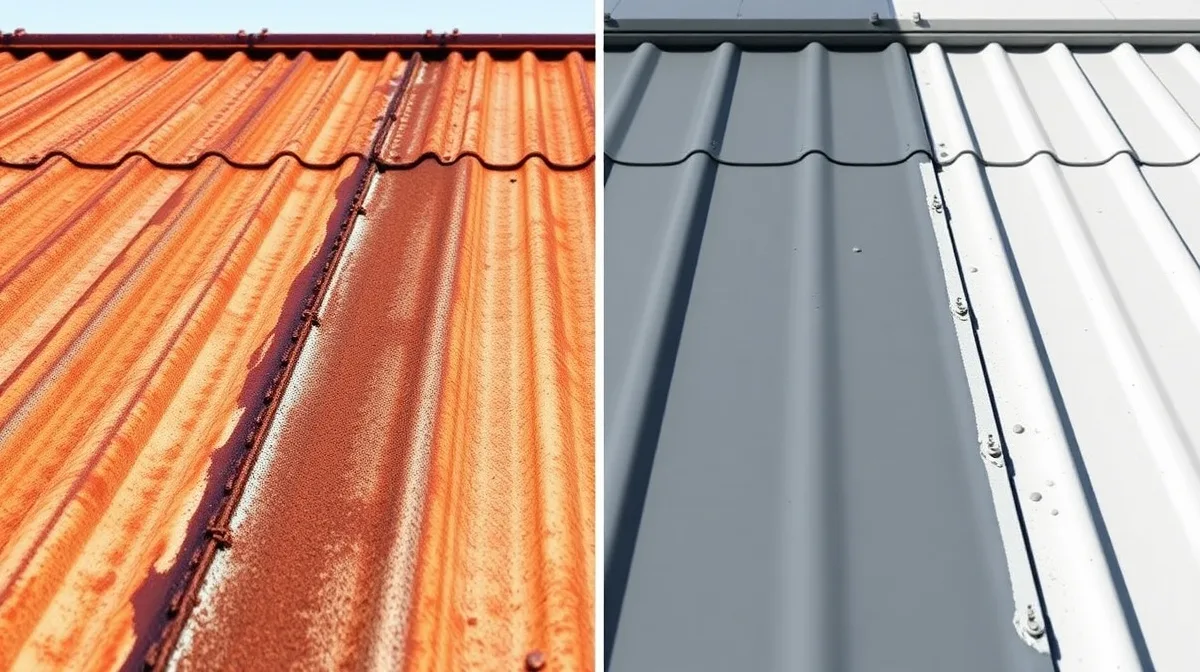
Metal roofs are usually the substrate where prep work adds the most to the final number. Before any reflective topcoat goes on, active rust and corrosion have to be addressed with a rust-inhibitive metal primer, and fasteners and seams typically need individual treatment to prevent rust bleed-through later. That primer-and-fastener-treatment phase is added labor and material on top of the coating itself, which is why metal roof projects often land in the middle-to-upper part of the general cost range even when the coating system chosen is the more affordable acrylic option. Skipping this prep step to save money is a false economy — untreated rust will telegraph straight through even a good topcoat within a couple of seasons.
Single-Ply (TPO / EPDM / PVC)
Single-ply membrane roofs that are structurally sound but aging are strong coating candidates, and pricing here tends to track closer to the general range without the added rust-prep premium metal carries. The main variable on single-ply is seam condition — seams and membrane laps that have separated or degraded typically need fabric-reinforced detailing worked into the coating system before the field coat goes down, which adds labor time proportional to how much seam work the roof needs.
Built-Up (BUR) & Modified Bitumen
Gravel-surfaced BUR roofs and cap-sheet modified bitumen roofs bring their own prep consideration: loose gravel typically needs to be embedded or removed from the coating zone, and existing seams need to be sealed before a reflective coating system can be applied over the asphalt-based surface. That gravel-handling step is the main cost driver that separates a straightforward BUR recoat from a more involved one.
Spray Foam (SPF)
Spray polyurethane foam roofs are a slightly different case, because the coating is the protective topcoat over the foam rather than a restoration of a separate membrane. SPF recoat projects — refreshing the topcoat that keeps the underlying foam UV-protected and watertight — commonly fall into the $3-$5 per square foot restoration/recoat range, since the foam substrate itself typically needs only cleaning and minor repair rather than the heavier prep metal or gravel-surfaced BUR roofs require.
Roof Coating vs. Full Roof Replacement: Cost Comparison
This is usually the number property owners actually want to know: how does coating restoration compare to tearing the roof off and starting over? On a per-square-foot basis, a full tear-off and replacement is consistently several times more expensive than a coating restoration — restoration work is, in almost every real-world case, a fraction of what replacement costs. That gap exists because replacement isn't just new material; it's disposal of the old roof system, full deck inspection and repair, and often a longer project timeline with more disruption to whatever is happening underneath the roof.
Coating restoration skips nearly all of that. There's no tear-off, no landfill disposal cost for old roofing material, and in most cases the building stays fully operational throughout the project since coating work doesn't require opening up the roof deck. That's the core value proposition of restoration: on a roof that's still structurally sound and dry underneath, a coating system can restore a fully seamless, watertight membrane and add another 10-15+ years of service life at a fraction of what a full replacement would cost for the same square footage.
- Coating restoration avoids tear-off labor, disposal costs, and deck-opening risk entirely
- Restoration projects generally keep the building fully operational — no extended shutdown
- Coating extends a sound roof's service life instead of resetting the clock at replacement cost
- Replacement is still the right call when the deck is wet, insulation is saturated, or damage is too extensive — an honest inspection will tell you which situation you're in
What Actually Swings the Price of Your Coating Project
Beyond the coating type and substrate, a handful of practical variables move a quote up or down within these national ranges. None of these are regional pricing tricks — they're the real, physical factors that determine how many labor-hours and how much material a given roof requires.
- Roof condition and prep required — how much cleaning, repair, seam treatment, or rust remediation the existing roof needs before coating can begin
- Number of coats and mil thickness specified — a heavier, multi-coat system for a demanding roof costs more material and labor than a single-coat maintenance recoat
- Roof access — rooftop equipment, limited access points, fall-protection and safety tie-off requirements, and building height all affect labor time
- Total roof size and scope — larger contiguous roof areas typically achieve a better per-square-foot rate than small, cut-up, or multi-level roof areas
- Detail work at penetrations and seams — HVAC curbs, skylights, drains, and parapet walls all require extra labor-intensive detailing versus open field area
- Weather window and scheduling — projects that have to work around a tight seasonal application window can carry different scheduling costs than a project with a flexible timeline
What a Legitimate Conklin-Certified Applicator Quote Should Include
One of the clearest signs you're dealing with a serious, certified applicator rather than someone underbidding a job they don't fully understand is what's actually written into the quote. A proper commercial roof coating proposal should be a detailed scope document, not a one-line number. At minimum, it should include:
- Total roof measurement and square footage the quote is based on
- A written assessment of current substrate condition, including any rust, ponding, seam separation, or membrane damage found during inspection
- The specific prep work required — cleaning, repairs, rust-inhibitive primer, seam or fabric reinforcement detailing — itemized, not bundled into a vague "prep" line
- The exact coating system specified (silicone or acrylic), number of coats, and target dry mil thickness
- Reinforcement/fabric detailing called out separately for seams, flashings, and penetrations
- Safety and access provisions, including any fall-protection or rooftop equipment considerations factored into labor
- Warranty terms in writing, including whether the installation qualifies for a Conklin-backed material warranty and what that requires to stay valid
- A project timeline and a clear line-item cost breakdown by phase (prep, primer, base coat, topcoat)
- Cleanup and site restoration responsibilities
If a quote skips straight to a bottom-line number with none of the above spelled out, that's a red flag — not necessarily that the price is wrong, but that you have no way to verify what you're actually paying for or hold the contractor to later.
Conklin the Manufacturer vs. Your Independent Certified Applicator
It's worth being direct about something that matters for every number in this guide: Conklin is the manufacturer that formulates and produces the silicone and acrylic coating systems referenced throughout this article. Conklin sells its coating systems only through trained, certified contractors — we are one of those independent, certified applicators, trained and authorized to install Conklin-brand roof coating systems to manufacturer specification. We are not Conklin corporate, and we don't manufacture the product ourselves — we apply it, as a certified contractor, on roofs across the country.
That distinction matters directly for how you should read pricing anywhere you find it, including in this guide. There is no single, corporate-set "Conklin price per square foot" — Conklin does not sell installation directly to property owners, and it doesn't publish or dictate installed pricing. Every certified applicator sets its own project and installation pricing based on labor, scope, and the specifics of a given roof. Similarly, when you hear about Conklin-backed material warranties — often structured as No-Dollar-Limit (NDL), non-prorated warranties covering material and labor for 10-20 years depending on the system — that warranty is administered by Conklin as the manufacturer, and it requires certified-applicator installation to qualify. We can tell you factually how those warranty programs work and get your installation set up to be eligible, but we don't issue or personally guarantee Conklin's corporate warranty terms.
Getting an Accurate Number for Your Roof
Every range in this guide is a starting point, not a quote. The only way to get an accurate number for your specific building is a physical roof inspection — checking substrate condition, drainage, existing membrane or metal condition, and any areas of active damage before recommending a system. As a Conklin-certified applicator serving commercial, industrial, retail, and multifamily properties nationwide, we offer free roof inspections and coating estimates so you get real numbers for your roof, not a generic range. If you're weighing coating restoration against a full roof replacement, that inspection is also the fastest way to find out honestly which side of that decision your roof actually falls on.
Frequently asked questions
Most commercial roof coating projects run about $1.50 to $6.50 per square foot installed, with silicone systems specifically running $3.50-$7.00 per square foot and acrylic systems typically landing at the lower end of the general range. Restoration/recoat projects on an already-coated roof usually run $3-$5 per square foot. The exact number depends on roof condition, substrate, and the coating system specified.
The biggest factors are existing roof condition and how much prep work is needed, the number of coats and mil thickness specified, roof access and safety requirements, total roof size, and how much detail work is required at seams, penetrations, and flashings. Metal roofs typically add cost for rust-inhibitive primer and fastener treatment before a topcoat can go down.
In almost every real-world case, yes. Coating restoration is typically a fraction of the per-square-foot cost of a full tear-off and replacement, since restoration avoids demolition, disposal, and deck-opening costs and generally keeps the building fully operational during the project. Replacement is still the right call when the deck or insulation is wet or damage is too extensive for a coating to seal properly.
No. We offer free roof inspections and coating estimates nationwide. A physical inspection is the only way to give you an accurate, project-specific number rather than a general range, and it's also how we determine honestly whether your roof is a good coating candidate or would be better served by replacement.
No. Conklin manufactures the coating systems referenced in this guide, but it doesn't sell installation directly to property owners or set installed pricing. The ranges here reflect this applicator's own project pricing history, presented as typical national ranges — every certified applicator sets its own installation pricing based on labor, scope, and the specifics of the job.
Ready for a free roof coating estimate?
Tell us about your roof and we'll build a clear, no-pressure estimate.