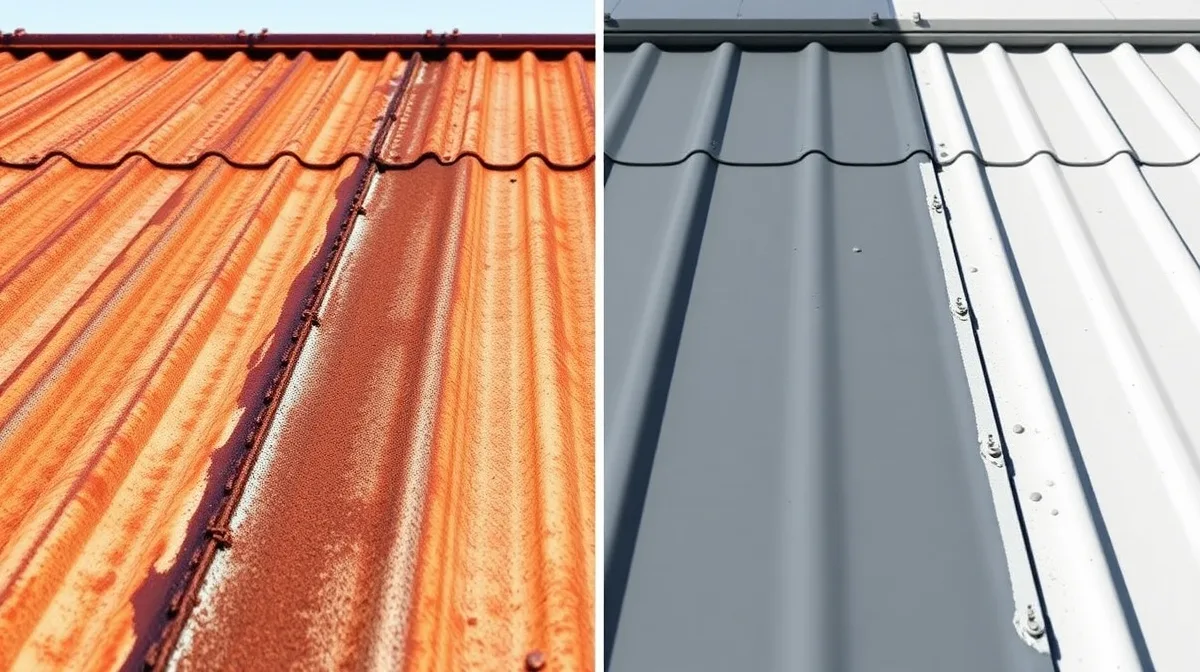
Silicone vs. Acrylic Roof Coating: Which Is Right for Your Commercial Roof?
Ask three roofing contractors whether silicone or acrylic is the "better" coating and you'll likely get three different answers, because the honest answer is that neither one is universally better. Each is formulated to solve different roof problems, and the right choice comes down to your roof's drainage, climate exposure, and budget cycle. As a certified applicator of Conklin-brand coating systems, we install both regularly, and the roofs that end up happiest are the ones where the coating was matched to actual conditions instead of picked by habit.
This guide breaks down silicone and acrylic elastomeric roof coatings side by side across the factors that matter on a commercial low-slope roof: ponding water performance, UV and weathering behavior, reflectivity, installed cost, recoat cycle, and which roof conditions favor each. We'll close with a short decision checklist you can use before requesting an inspection.
The Core Difference: Sacrificial vs. Non-Sacrificial
Before comparing performance categories, it helps to understand the core chemistry difference. Acrylic coatings are water-based and sacrificial, meaning the coating film gradually loses mil thickness as it weathers, sheds dirt, and cycles through UV and moisture exposure. It's designed to erode slowly and predictably, which is part of why it performs well in areas with consistent rainfall. Silicone coatings, by contrast, are non-sacrificial. The cured film doesn't break down or lose thickness the same way under UV or standing water, which is what gives silicone systems their longer service life and superior performance in ponding-prone conditions.
Ponding Water Performance
This is the single biggest differentiator between the two systems, and it's often the deciding factor on its own. Acrylic coatings are not recommended for roof areas where water regularly ponds for 48 hours or longer. Standing water accelerates the sacrificial erosion process and can lead to premature failure at low spots, exactly the areas a roof can least afford to fail. Silicone coatings were formulated to solve this problem: silicone resists degradation from prolonged water contact and holds up under repeated ponding cycles far better than acrylic, which is why it's the default recommendation for roofs with poor drainage or structural sag that creates persistent low spots.
- Roof with any area holding water 48+ hours after rain: silicone is the appropriate system
- Roof that drains fully within 24-48 hours: acrylic is typically a safe, cost-effective option
- Roof with mixed drainage (good slope overall, isolated low spots): silicone at the low spots, acrylic across the field is sometimes the right hybrid approach
UV and Weathering Behavior
Both coating families handle UV exposure, but they age differently. Because acrylic is sacrificial, its resistance to UV and weathering is built around a controlled, gradual wear pattern; it holds up well but is expected to thin over its service life and eventually need a maintenance recoat. Silicone's non-sacrificial nature means it resists UV breakdown, chalking, and cracking more durably over the long haul, which is a major reason it carries a longer potential lifespan. The tradeoff shows up in appearance rather than protection: silicone tends to attract more surface dirt over time since it doesn't shed its top layer, while acrylic's sacrificial wear gives it a natural self-cleaning effect in the rain.
Reflectivity
Both silicone and acrylic coatings are typically applied in bright white, high-reflectivity finishes that qualify as "cool roof" systems, and both reduce rooftop surface temperature compared to an uncoated dark membrane or aged asphalt roof. Fresh installs of either system deliver comparable reflectivity out of the gate. Where they diverge is over time: acrylic's self-cleaning behavior tends to preserve reflectivity better in dirtier environments since grime washes off with the sacrificial layer, while silicone's dirt pickup can gradually dull reflectivity between recoats, particularly in low-rainfall or high-dust environments.
Cost and Recoat Cycle
Silicone systems carry a higher material cost than acrylic, generally landing in the range of roughly $3.50 to $7.00 per square foot installed, while acrylic systems typically land toward the lower end of the general commercial coating range of about $1.50 to $6.50 per square foot. That upfront cost gap reflects silicone's longer potential service life, which can run 20-plus years on a well-maintained system, versus a more typical 10 to 15 year lifespan for acrylic before a full recoat is warranted. Acrylic's lower material cost, easier application, and shorter cure requirements can make it the more budget-friendly choice for buildings on a tighter capital cycle or roofs that don't have ponding concerns. These figures are this applicator's typical project pricing, not a fixed Conklin corporate price list, and every roof gets a firm number only after an on-site inspection.
Which Roof Conditions Favor Each System
Choose Silicone When:
- The roof has known ponding areas or poor drainage that isn't being corrected structurally
- The building is in a high-UV, high-heat climate where long-term weathering resistance matters most
- You want the longest possible service life before a full recoat and can absorb the higher upfront cost
- The roof has a history of coating or membrane failure specifically at low spots
Choose Acrylic When:
- The roof drains well with no significant ponding areas
- Budget and near-term project cost are the primary constraint
- You want strong reflectivity with natural self-cleaning in a rain-exposed region
- The roof is on a shorter planned ownership or renovation horizon where a 10-15 year system fits the timeline
Decision Checklist
Before you decide, walk your roof (or have it inspected) and answer these questions honestly. They'll point you toward the right system faster than any brochure will.
- Does water pond anywhere on the roof for more than 48 hours after a rain event? If yes, lean silicone.
- Is the roof substrate metal, single-ply, BUR, or spray foam, and does it have any low-slope or flat sections?
- What's your realistic ownership or hold horizon for this building, 10 years or 20-plus?
- Is upfront installed cost or long-term lifespan the higher priority for this budget cycle?
- Is the building in a high-dirt, low-rainfall environment where self-cleaning reflectivity matters, or a wetter climate where that's less of a concern?
- Has this roof had prior coating or membrane failures, and if so, where specifically?
In many cases the honest answer is a hybrid: silicone reinforced at ponding-prone low spots and seams, acrylic across the well-draining field, which can balance performance and cost on roofs with mixed drainage. That kind of system-matching decision is exactly what a roof inspection is for, and it's the same evaluation we walk through on every project before quoting a system.
Frequently asked questions
Neither is universally better; they're formulated for different conditions. Silicone outperforms on ponding water and long-term UV resistance and carries a longer potential lifespan, while acrylic costs less, applies more easily, and self-cleans well on roofs that drain properly.
Yes, a hybrid approach is common on roofs with mixed conditions. Silicone can be applied at known ponding areas, low spots, and seams, while acrylic covers the well-draining field, balancing performance against overall project cost.
Acrylic is a sacrificial coating, meaning its top layer wears away gradually and takes surface dirt with it in the rain. Silicone is non-sacrificial and holds its film thickness, which protects it structurally but means it doesn't shed dirt the same way.
A general rule of thumb in the industry is that any area holding water for 48 hours or longer after a rain event is considered a ponding concern. A roof inspection can identify exactly where and how severe the ponding is before recommending a system.
Ready for a free roof coating estimate?
Tell us about your roof and we'll build a clear, no-pressure estimate.