Metal Roof Restoration with Conklin Coating Systems: Stopping Rust and Leaks for Good
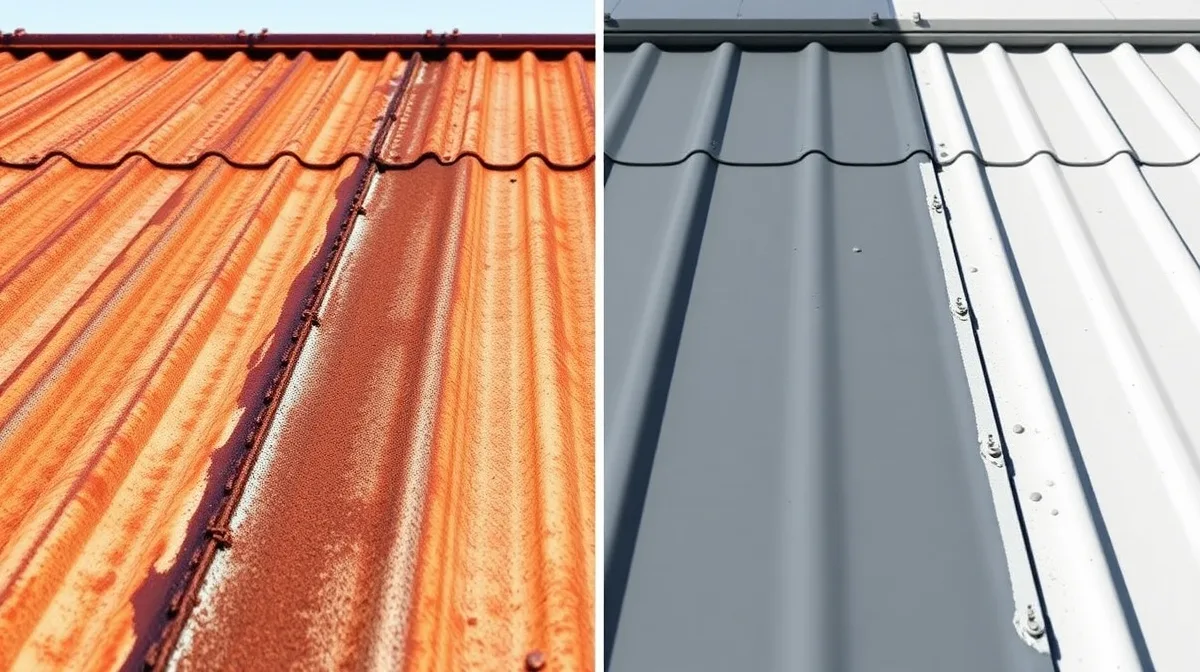
Every aging metal roof tells the same story eventually: rust bleeding down a panel seam, a fastener head weeping orange at the washer, a soft ceiling tile below a spot nobody noticed until it stained. Property managers usually see two options — patch it again or tear off and replace. There's a third path that gets overlooked far more often than it should: a properly sequenced metal roof restoration using a rust-inhibitive primer, treated seams and fasteners, and a reflective elastomeric topcoat. Done right, it stops active rust, seals the leak points that actually cause water intrusion, and buys the roof another decade or more of service life at a fraction of replacement cost.
The catch is that "done right" is doing a lot of work in that sentence. Most metal roof coating failures we get called out to inspect didn't fail because the topcoat was a bad product — they failed because someone sprayed a topcoat over active rust and called it done. This guide walks through why that shortcut doesn't work, and what an actual restoration sequence looks like when it's built to last.
Why Untreated Rust Defeats Even a Good Topcoat
Rust is not a static stain — it's an active chemical process, and it doesn't stop just because you've covered it with paint or coating. Iron oxide keeps expanding under the surface as long as moisture and oxygen can reach the base metal, and that expansion pushes against whatever's sitting on top of it. A topcoat applied directly over corrosion will look fine for a season, then start to blister, crack, and delaminate right at the rust site as corrosion underneath keeps growing. At that point you haven't extended the roof's life — you've spent money hiding a problem that's still actively eating the panel.
This is the single most common mistake we see on metal roofs that come to us for a "second opinion" after a coating job has failed: good product, wrong prep. Reflective elastomeric topcoats are engineered to seal, flex, and reflect UV — they are not formulated to arrest active corrosion. The corrosion has to be mechanically addressed and chemically inhibited before a topcoat system goes on, or the restoration is only cosmetic.
The Full Metal Roof Restoration Sequence
A metal roof restoration that's actually built to stop rust and leaks follows a specific order, and skipping a step — or doing steps out of sequence — is exactly how coating jobs end up back on our inspection list two years later. Here's the sequence, start to finish.
1. Assess
Every restoration starts with a full roof assessment: identifying the metal panel type and gauge, mapping active rust locations versus surface staining, checking fastener condition, inspecting seams and laps for separation, and confirming there's no structural deck damage hiding under the corrosion. This is also where we check for ponding water at low points and flashing details at penetrations, curbs, and edges — all of which change how the rest of the sequence gets scoped. Skipping the assessment means guessing at prep, and guessing at prep on a metal roof is how you end up re-coating over a problem instead of solving it.
2. Mechanical Prep
Before any primer touches the panel, loose and scaling rust, chalking, mill scale, and surface contaminants have to come off. Depending on severity, that means power washing, wire brushing, or mechanical abrasion on affected areas — the goal is a clean, sound substrate with no loose material left to trap moisture underneath. This is the step that gets rushed or skipped on a bad job, and the one that determines whether everything applied afterward actually bonds and holds.
- Remove loose, flaking, or scaling rust down to sound metal
- Clean chalking, dirt, and mill scale off the panel surface
- Confirm the substrate is fully dry before moving to primer
- Flag any panels with through-corrosion that need spot repair before coating
3. Rust-Inhibitive Primer
This is the step that actually stops corrosion, and it's non-negotiable on any metal roof with existing rust. A rust-inhibitive metal primer bonds directly to the prepared substrate and chemically arrests further oxidation — it's the layer doing the corrosion-stopping work, not the topcoat. On roofs with isolated rust spots, primer gets applied as a targeted spot treatment; on roofs with widespread corrosion, it goes down as a full-panel base coat. Either way, this layer comes before any seam or fastener treatment, because it establishes the sound, rust-arrested surface everything else builds on.
4. Seam and Fastener Treatment
Metal roofs don't leak in the middle of a panel — they leak at the seams and fasteners, which is exactly where rust starts and exactly where a restoration has to focus extra attention. Exposed fastener heads back out slightly over years of thermal cycling, their washers degrade, and the small gap that opens up becomes both a leak point and a place for rust to bleed through and stain the panel below it. Lap seams see the same movement and open up the same way. Addressing this properly means hand-treating every exposed fastener — often re-seating or replacing failed ones — and reinforcing seams with a compatible sealant or fabric-reinforced detail before the topcoat goes over the top. Skip this step and roll the topcoat over everything uniformly instead, and the roof will start weeping rust and water again at the same spots within a season or two.
- Re-seat or replace backed-out and failed fasteners
- Treat every exposed fastener head individually, not just the field
- Reinforce lap seams with a compatible sealant or fabric detail
- Address penetrations and curb flashings as their own seam-treatment zone
5. Reflective Topcoat
Once the substrate is sound, the corrosion is chemically arrested, and every seam and fastener is treated, the reflective elastomeric topcoat goes on as the final membrane. This is the layer most property owners notice day to day: it seals the roof into a continuous, monolithic surface, reflects solar heat to cut roof-surface temperatures and reduce condensation swings that cause interior "roof sweating," and gives the system its long-term UV and weathering resistance. It's applied in multiple coats to reach proper mil thickness across the field and at all the detail work completed in the prior step. None of this holds up, though, if the layers underneath it were skipped — the topcoat is the finish, not the fix.
What This Means for an Aging Metal Roof
For a metal roof with isolated rust spots, minor seam separation, and no structural deck issues, this sequence is what allows restoration to be a legitimate alternative to replacement — not a stopgap. Conklin-brand coating systems are designed for this kind of metal restoration work, and qualifying installations by a certified applicator can carry Conklin-backed material warranties, typically non-prorated and covering material and labor for a defined term depending on the system selected. We install these systems as an independent, Conklin-certified applicator; we don't set or speak for Conklin's corporate warranty terms, but we can walk through what a given system's warranty covers on your roof during an inspection.
The tradeoff, and the reason this sequence matters more on metal than almost any other substrate, is that a shortcut here doesn't just shorten the coating's lifespan — it can mask active corrosion that keeps eating the panel underneath a topcoat that looks fine from the ground. A roof that's coated properly, in the right order, is one where the rust is actually gone, not just covered.
When Restoration Isn't the Right Call
Restoration has limits, and an honest assessment says so upfront. If corrosion has progressed to through-panel perforation across large sections, if the deck structure has been compromised, or if too much of the fastener and seam system has failed for spot treatment to realistically address, replacement of those sections — or the roof — becomes the more responsible call. A proper assessment step catches that distinction early, before money gets spent on a system the substrate can't support.
For most aging metal roofs that still have sound structural decking, though, this sequence is what separates a restoration that actually stops rust and leaks from one that just delays the inevitable by a coat of paint's worth of time. A free inspection is the fastest way to find out which category your roof falls into.
Frequently asked questions
No — applying a topcoat directly over active rust just traps a corrosion process that's still expanding underneath, and the topcoat will blister and delaminate at those spots within a season or two. Rust-inhibitive primer over properly prepped, cleaned metal is what actually arrests the corrosion; the topcoat then seals and reflects on top of that sound base.
A properly sequenced metal restoration — mechanical prep, rust-inhibitive primer, seam and fastener treatment, and a reflective topcoat — typically extends roof life 10-15+ years, and qualifying installations by a Conklin-certified applicator can carry manufacturer-backed material warranties on top of that. Actual lifespan depends on the specific system chosen and the roof's starting condition.
Thermal cycling causes fastener heads to back out and washers to degrade over years of use, and lap seams see the same expansion-and-contraction movement — both create small gaps where water gets in and rust starts. That's why a restoration treats seams and fasteners individually rather than relying on the topcoat alone to bridge those gaps.
Ready for a free roof coating estimate?
Tell us about your roof and we'll build a clear, no-pressure estimate.