Signs Your Commercial Roof Needs a Restorative Coating (Not a Full Replacement)
There's a Window - and It Closes
Every commercial roof moves through the same arc: sound and watertight, then weathered, then compromised, then failed. A restorative coating system works extremely well at one end of that arc and does nothing useful at the other end. The hard part for a property or facility manager isn't knowing that coatings exist - it's knowing which end of the arc a specific roof is currently sitting on. Wait too long to make that call and a roof that could have been restored for a fraction of tear-off cost ends up needing full replacement anyway, on a shorter timeline and a bigger budget line than anyone planned for.
This checklist walks through the five conditions we look for most often on a first-visit inspection, in roughly the order they tend to show up as a roof ages. None of them are, by themselves, a reason to panic. Taken together, and matched against how far each one has progressed, they tell you whether a coating restoration is still the right call or whether it's time to start budgeting for replacement instead.
Five Things to Check Before You Decide
1. Surface Chalking
Run a hand across the roof surface. If it comes away covered in a fine, powdery residue - especially on an acrylic or aged elastomeric coating - that's chalking, the visible sign of UV degradation eating into the coating's surface resin. Light-to-moderate chalking on a membrane that's otherwise intact is a textbook coating candidate: the substrate underneath is still doing its job, it just needs a fresh reflective, protective layer on top. Chalking becomes a bigger concern only when it's accompanied by visible fiber or scrim showing through, which signals the coating has worn past a simple recoat and into substrate exposure.
2. Minor Ponding Water
Ponding water 48 hours or more after a rain event is worth documenting, but not all ponding is equal. Small, shallow puddles in the low points of an otherwise flat roof - especially where the membrane and insulation beneath are still dry and firm underfoot - are a normal drainage characteristic of many low-slope roofs, and they're exactly what a silicone coating system is built to handle: non-sacrificial, UV-stable, and rated for standing water in a way acrylic systems aren't. The disqualifying version of ponding is deep, widespread standing water sitting over a deck that's gone soft or spongy - that's a sign moisture has already worked its way into the insulation, which is a different and more serious problem.
3. Small Seam Separations
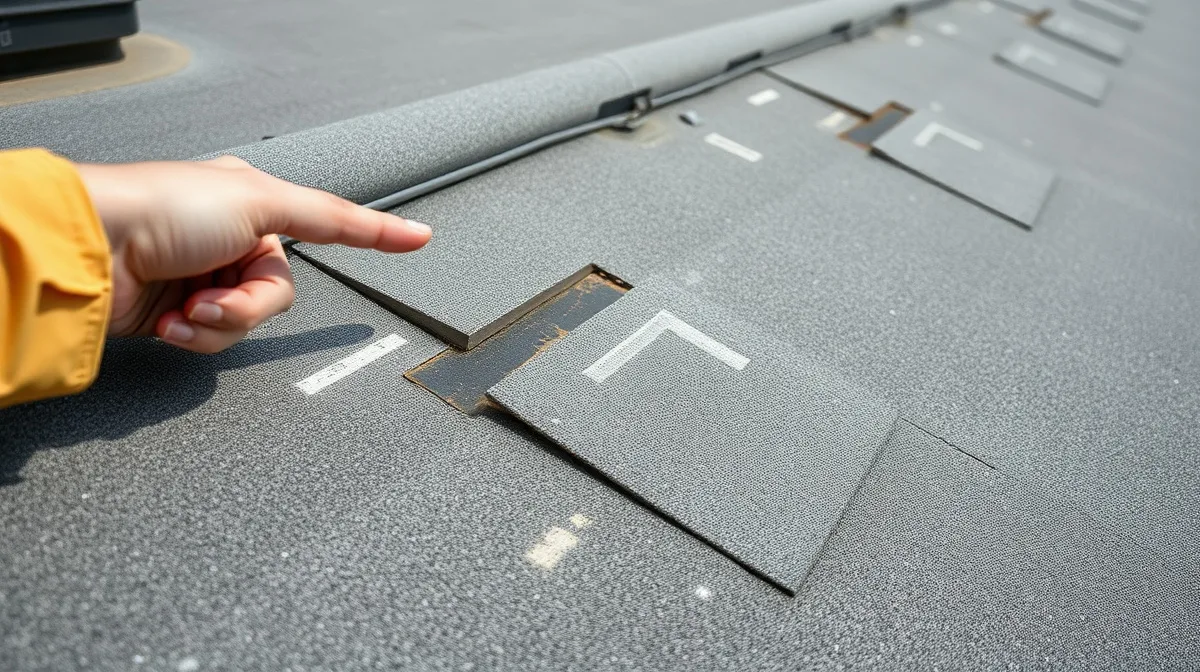
On single-ply (TPO/EPDM/PVC), built-up, and modified bitumen roofs, seams are almost always where trouble starts first. A handful of small, isolated seam lifts or edge separations - a few inches here and there, no active water intrusion below deck - are routine restoration work: fabric-reinforced seam detailing goes down before the coating, and the finished membrane comes out stronger at the seam than the original installation. What tips a roof out of coating territory is seam failure that's widespread across the field of the roof, or seams that have already let water track laterally under the membrane, since coating over trapped moisture just seals a problem in rather than solving it.
4. Granule Loss on Modified Bitumen
Cap-sheet modified bitumen roofs shed granules as they age, and bald or thinning patches - especially at high-traffic areas, roof edges, and around rooftop equipment - expose the asphalt underneath to direct UV, which accelerates aging fast. Moderate, even granule loss across an otherwise structurally sound cap sheet is a strong coating candidate, since the coating itself becomes the new UV-protective surface. Granule loss combined with visible alligatoring, cracking, or brittle cap sheet that flakes when flexed is past what a coating alone should be asked to fix.
5. Isolated Rust Spots on Metal Roofs
On metal roofs, small rust spots at fasteners, seams, or scattered panel surfaces are the single most common - and most fixable - finding on an otherwise sound metal roof. Rust-inhibitive metal primer prep at those specific locations, fastener and seam treatment to stop bleed-through, and a reflective topcoat over the whole field is standard metal restoration work, not a red flag. The line moves toward replacement when rust has progressed to through-panel perforation, structural panel deformation, or corrosion across a large percentage of the roof field rather than isolated spots - at that point you're patching a roof that's structurally failing, not restoring one that's still sound.
When the Checklist Tips the Other Way
A few findings move a roof out of coating territory regardless of how the other four items look: a deck that's visibly sagging or soft underfoot, insulation that tests wet across a significant portion of the roof, membrane or cap sheet that's cracked and brittle across large areas rather than isolated spots, and rust that's perforated metal panels rather than surface-staining them. Any one of those means the roof's underlying structure - not just its weather-facing surface - has been compromised, and no topcoat changes that. We walk through this exact decision in more depth, including the specific inspection criteria we use to make the call, on our restoration-vs-replacement guide.
What a Free Inspection Actually Confirms
Every item on this list is something a trained eye can spot from a walk-on roof inspection, but the confirmation that matters - dry vs. wet insulation, sound vs. soft deck, isolated vs. widespread seam failure - takes a physical inspection, not a photo from the ground. If your roof is showing one or two of these signs and you're not sure which side of the line it's on, a free inspection gives you a straight answer either way: a coating recommendation with a real project cost range, or an honest read that replacement is the better long-term call. Our cost guide breaks down typical per-square-foot ranges for both paths if you want ballpark numbers before you call. Reach us at 844-967-5247 or josh@contractorschoiceagency.com to schedule one.
Frequently asked questions
The clearest disqualifiers are a soft or sagging deck, insulation that tests wet across a significant area, membrane or cap sheet that's brittle and cracked in large sections rather than isolated spots, and metal panels with through-corrosion rather than surface rust. If none of those are present, a coating restoration is usually still on the table.
Yes, in most cases - shallow ponding over a dry, structurally sound deck is exactly the condition silicone coating systems are designed to handle, since silicone is non-sacrificial and rated for standing water in a way acrylic systems aren't. Deep ponding over a soft or spongy deck is a different situation that needs a closer look before any coating decision.
Earlier is better. Chalking, minor ponding, small seam gaps, granule loss, and isolated rust spots are all still coating-friendly conditions - waiting until they progress into active leaks, saturated insulation, or structural deck damage is usually the difference between a coating restoration and a full roof replacement.
Ready for a free roof coating estimate?
Tell us about your roof and we'll build a clear, no-pressure estimate.